FAQ
Frequently Asked Questions in Omaha, NE and Council Bluffs, IA
Welcome to Mad Hatter Auto Repair
If You Have Questions, We Have the Answers
General Car Maintenance
How often to get an oil change can depend on the vehicle and type of oil used. We still stand by the 3,000 miles or 3 months with synthetic blend and up to 5,000 miles and 5 months for full synthetic oil. You should get the service done at whatever happens first
To give anyone a general recommendation of oil without knowing the vehicle and mileage would be a great disservice. Always refer to your owners manual or your trusted mechanic.
A great mechanic will keep you in the know of the state of your vehicle including tires when they inspect it. You should never run below 2/32” of tread depth. We would recommend replacing tires at 3/32 to 4/32 inches.
5,000 miles or every other oil change is the best recommendation to really keep track of. If you get full synthetic oil or are on a longer oil change interval, you should rotate every time you change your oil.
Industry recommends 15,000 miles but having your mechanic inspecting it every oil change will keep you on top of it.
Slow cranking when trying to start your vehicle is probably the best sign outside of a battery test. You may also experience dimmer lights when not running also. Having your battery tested every oil service is the best way to not end up stranded because some batteries may just give out without any signs other than a proper battery test.
Proper maintenance would be the best way to keep your vehicle’s efficiency up. Dirty oil, poor spark, improper injector spray, dirty intake, clogged air filter and deflated tires can all cause your full efficiency to decrease.
We look at our customers’ brakes every oil service or when we do a vehicle inspection. How fast brake pads wear out will depend on the driver and conditions more than anything. Most brake pads will not give you warning until they are past the point of a maintenance procedure.
I personally recommend it at least once a year. But changing from summer to winter and then winter to summer is what a wiper blade company will recommend.
Normally you will notice the vehicle pulling to one side or the steering wheel feeling loose or crooked but your alignment could be off and you will not notice anything. A good mechanic will look at tire wear to tell but the best strategy would be to get an alignment once a year with the roads we have in the Omaha and Council Bluffs area.
Repairs and Issues
There are literally thousands of different codes that will turn on a check engine light. Probably the most common are P0171 or P0172 codes which indicate the engine is not combusting right in the cylinder. Other codes such as P0300 – P0310 misfire codes say that the engine just knows there is a misfire but not why or what is causing it.
We recommend taking your vehicle to your mechanic to figure out why you have a check engine light on. If your check engine light is flashing you should stop driving and get it towed into your mechanic right away as this means that there is a problem that WILL cause more problems.
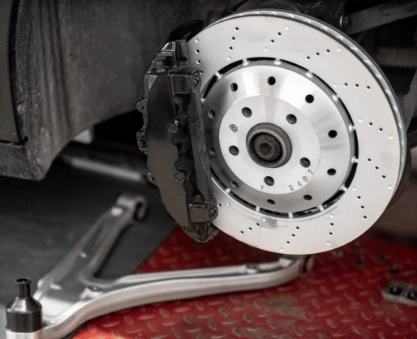
First your mechanic should keep you in the loop on brake pad thickness so you will hopefully be in the know well before any signs. But if you feel a low or soft brake pedal, the brake pedal goes to the floor, there is a noise when braking or noise all the time, you probably have a problem with the brakes.
Pull off the road to a safe spot and shut off your vehicle. We would recommend calling a tow truck because touching the cooling system may cause burns to yourself. Continual overheating or extreme overheating could cause more damage to your vehicle.
Without hearing and driving the vehicle this would be very hard to tell you. We would recommend bringing in your vehicle and having a mechanic drive it to figure out the problem.
This could be caused by a tire or wheel out of balance. This could also be caused by a loose suspension part or bad alignment. The best recommendation is to have a mechanic look over the vehicle so you can get it fixed and drive safely down the road.
This could be a loose or bad suspension part, bad tire or alignment. A suspension inspection and alignment would be the first step but tell the shop the problem and not ask for just an alignment because that may not be the fix.
Your car has a leak in one of its systems with fluid. As far as the colors go, you may not always be able to tell what the fluid is because manufacturers have different colors of fluids. Oil, gear lube, dirty transmission and power steering fluid is a brownish fluid. Red fluid could be transmission, power steering and coolant. Additionally, coolant could be red, green, blue and pink. So the best way to know for sure is to have someone look at it and find the source of the leak.
It means something is burning or creating smoke. The most common issue is an oil leak with this complaint. We would get it into the shop because if you can smell the leak it is not a small one typically.
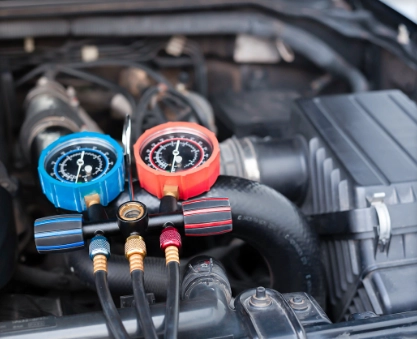
This could be because your system has a leak and the refrigerant has leaked out and shut the system down. There could also be electrical mechanical issues with the system. Best bet is to take it to a mechanic that can properly service the A/C system.
Parts and Replacement
Always replace them at or before the vehicle’s recommended scheduled maintenance. This is because if they go bad you may need to replace the engine to repair the damage.
Signs of a failing alternator include dim headlights while driving, a slow engine crank when starting your vehicle, or a battery/charging warning light appearing on your dashboard. If you notice any of these issues, it may be time to have your alternator inspected.
Always refer to your owner’s manual or the vehicle’s recommended scheduled service intervals.
That is a tricky question because there are aftermarket companies that make the OEM parts. A good mechanic will know when you can use an aftermarket part to save money. OEM is what could be considered a higher quality part but not always. A lot of the time aftermarket parts will carry a longer warranty than the OEM, so if you want something from the dealer ask when dropping off your vehicle but there may be a more cost effective alternative with a longer warranty you can use.
This used to be when you saw actual cracks in the belt and that concept still stands but is not always the most accurate. New rubber can wear out before they even crack, so a mechanic will measure the groove depth of the belt to determine the wear of the belt.
Cost and Process
This is a common question with no correct answer without knowing exactly what vehicle and what needs to be fixed on the brakes. Brake pads can vary from $185 to $800 or even more depending on make, model and parts needed. The best case scenario is to have a mechanic look them over and give an accurate estimate of all the needed parts.
If you ask the mechanic they will typically say, “however long it takes”. Depending on the repair, parts availability and vehicle, the repair times vary a lot. Things like an oil change will take about 30-40 minutes but we find the average vehicle is around 3-4 hours once the job is sold depending on parts.
This is our favorite question to get asked!!! We recommend putting how much a car payment is in savings every month. With that money pay your repair bill with that saving account. When you see your savings account going down over 6-12 months it is time to get a new vehicle. If your mechanic recommends you are going to be going down a bad hole you should probably switch vehicles.
We do not give pricing off what other shops recommend because we do not want to be tied to their diagnosis if it is wrong. If you do not feel comfortable with what a mechanic is telling you then YES you should. We recommend getting a proper diagnosis and not look for a cheaper shop because you are not solving the problem with a lower price.
The first indicator of being charged fairly is how you feel about the experience. A trustworthy auto repair shop will prioritize transparency and ensure you feel informed and valued, not just like a number. Here are some questions to ask yourself:
- Did they explain the repairs clearly? A good shop will walk you through the problem and the solution in a way that makes sense.
- Did they show you what was wrong? Visual explanations or photos of the issue can help build trust.
- Do you understand what you’re paying for? Be sure of the invoice or estimate details of the parts and labor.
- What is the warranty? A reputable shop will stand behind their work with a solid warranty.
- Do you feel like they had your best interests in mind? Watch out for upselling unnecessary parts or services.