

How Do I Know If My Tires Are Ready for a Road Trip?
Prepare for Your Road Trip
The best way to know if your tires are ready for a road trip is to have them professionally inspected before you leave. Since your tires are the only part of your vehicle touching the road, they play a major role in how your vehicle handles, stops, and rides during a long trip.
Tires naturally heat up as you drive. Highway speeds, summer temperatures, long distances, and extra weight from passengers or luggage can put even more stress on them.
A Mad Hatter Road Trip Vehicle Inspection
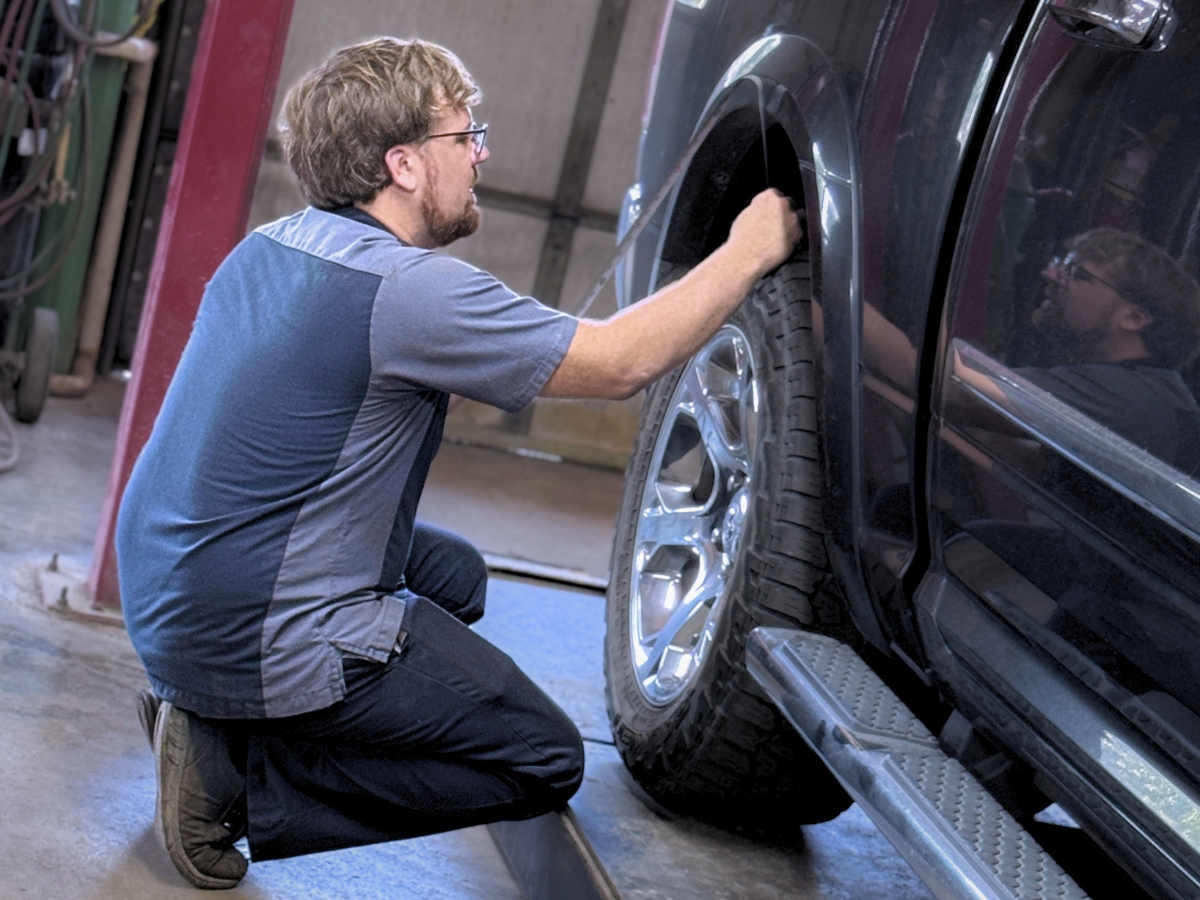
During our Road Trip Vehicle Inspection, our ASE-certified technicians inspect your tires, brakes, fluid levels, belts, hoses, battery, and other areas that can affect a long drive. For each tire, they complete a visual inspection and use gauges to measure tire pressure and tread depth.
For each tire, we check:
- Tread depth
- Tire pressure
- Uneven or unusual wear
- Cracks, bulges, punctures, or other visible damage
- Tire age and overall condition
- Signs that alignment or suspension concerns may be affecting tire wear
We asked Mad Hatter Auto Repair owner Zach Haver what technicians look for when inspecting tires before a road trip. Here is what he had to say:
"Tires can tell us a lot about what is happening with a vehicle. Low tread is important, but we also look for uneven wear, tire age, pressure concerns, and signs that alignment or suspension issues may be affecting how the tires wear. Before a road trip, we want customers to understand what we see so they can make a confident decision before they leave."
— Zach Haver, Owner, Mad Hatter Auto Repair
Looking at these findings together gives us a clearer picture of whether your tires are ready for the trip or if they need attention before you leave. No single part tells the whole story, so we base our recommendations on the full inspection.
Why Does Tire Condition Matter on a Long Drive?
Many drivers assume they can judge tire pressure just by looking at them, but a tire may appear normal and still be overinflated or underinflated. Underinflation makes a tire flex more and build additional heat, especially in hot weather. A blowout may seem to happen suddenly, but it often begins with low pressure, damage, or excessive wear that worsens as heat builds. We compare tire pressure with the vehicle manufacturer’s specification on the driver’s-door placard—not the maximum pressure listed on the sidewall.
While your Tire Pressure Monitoring System (TPMS) can alert you to low tire pressure, it cannot detect uneven tread wear, tire age, cracking, or many types of tire damage.
Tread depth matters year-round, but it becomes especially important when summer storms leave water on the road. The grooves give water a path out from under the tire, helping it maintain better contact with the pavement. Our technicians measure the tread at the inner, center, and outer portions of each tire because one area may be significantly more worn than the section that is easiest to see.
Even tires with plenty of tread can become less dependable as they age. Rubber naturally hardens over time, which can reduce traction and make cracking more likely. That is why we consider both the tire’s age and its overall condition—not tread depth alone—before making a recommendation.
What Can Uneven Tire Wear Tell Us?
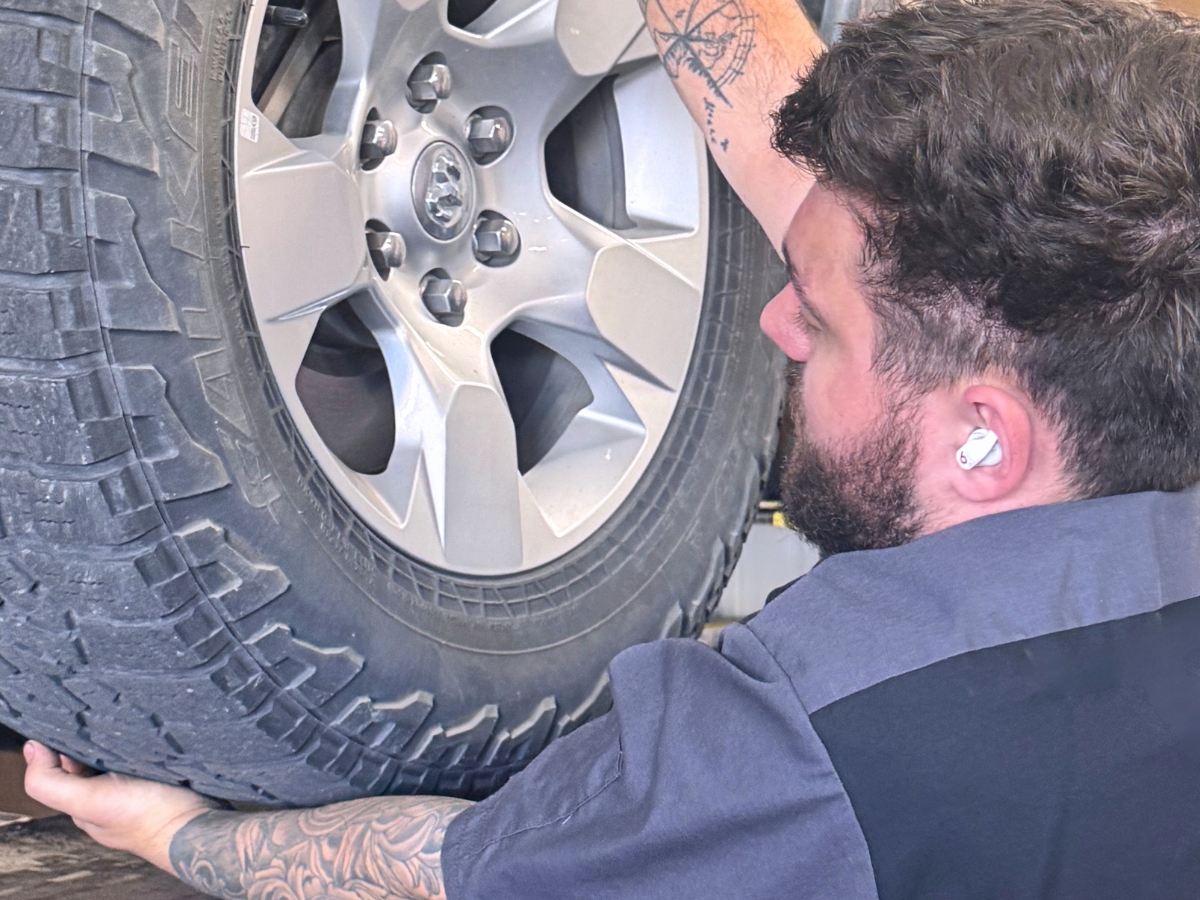
Uneven wear means one part of a tire is wearing faster than another. The pattern may point to incorrect tire pressure, an alignment problem, worn steering or suspension parts, or tires that are overdue for rotation.
While rotating your tires can help them wear more evenly, the correct rotation pattern depends on the vehicle and the tires. Directional tread designs and staggered tire sizes can limit where certain tires may be moved, so we do not use the same rotation pattern for every vehicle.
Before making a final recommendation, we want to understand why the uneven wear developed. We treat the wear pattern as a clue—not a complete diagnosis by itself. Addressing the cause can help keep the same pattern from developing on a new tire.

What Happens If My Tires Need Attention?
What we recommend depends on the type of concern we find and the overall condition of the tire. Some tire damage can be repaired. We need to inspect the tire first to determine whether it can be repaired safely or whether replacement is the safer option. Not every finding means the tire needs to be repaired or replaced. Your tires may only need a pressure adjustment or rotation. Uneven wear may lead us to suggest an alignment check or a closer look at the steering and suspension.
If a tire needs to be replaced, we also consider the condition of the other tires. We may recommend replacing tires in pairs so the tires on the same axle have similar tread depth and provide more balanced traction and handling. While we do not keep tires in stock, we can order replacements through one of our vendors or install tires that you have purchased somewhere else.
If we recommend a service, we will explain why, how soon it should be addressed, and what could happen if the concern is left alone. You can review the information, ask questions, and decide what is right for you. If it is safe to wait, you may choose to move forward now or plan the service for later. No pressure. Just honest answers.
Planning a Road Trip?
Planning a trip from Omaha or Council Bluffs? Mad Hatter Auto Repair is offering a Free Road Trip Vehicle Inspection* this summer. During the inspection, our ASE-certified technicians will check key systems such as your tires, brakes, fluids, belts, hoses, battery, and more.
We will also provide photos and technician notes showing both normal findings and any concerns. This helps you see what we found, understand our recommendations, and decide what you want to address before your road trip.
You can schedule an appointment for our Free Road Trip Vehicle Inspection through August 31, 2026.
☎️ Omaha: (402) 330-2286
☎️ Council Bluffs: (712) 322-7500
*Offer terms: A scheduled appointment is required for the complimentary Road Trip Vehicle Inspection. Additional testing or repairs, if needed, are not included. Cannot be combined with other offers. Additional fees and taxes are not included. Talk with your service advisor for complete details.
Want to Learn More?
If you would like to keep learning about road trip preparation and how we inspect vehicles, these related articles may help: